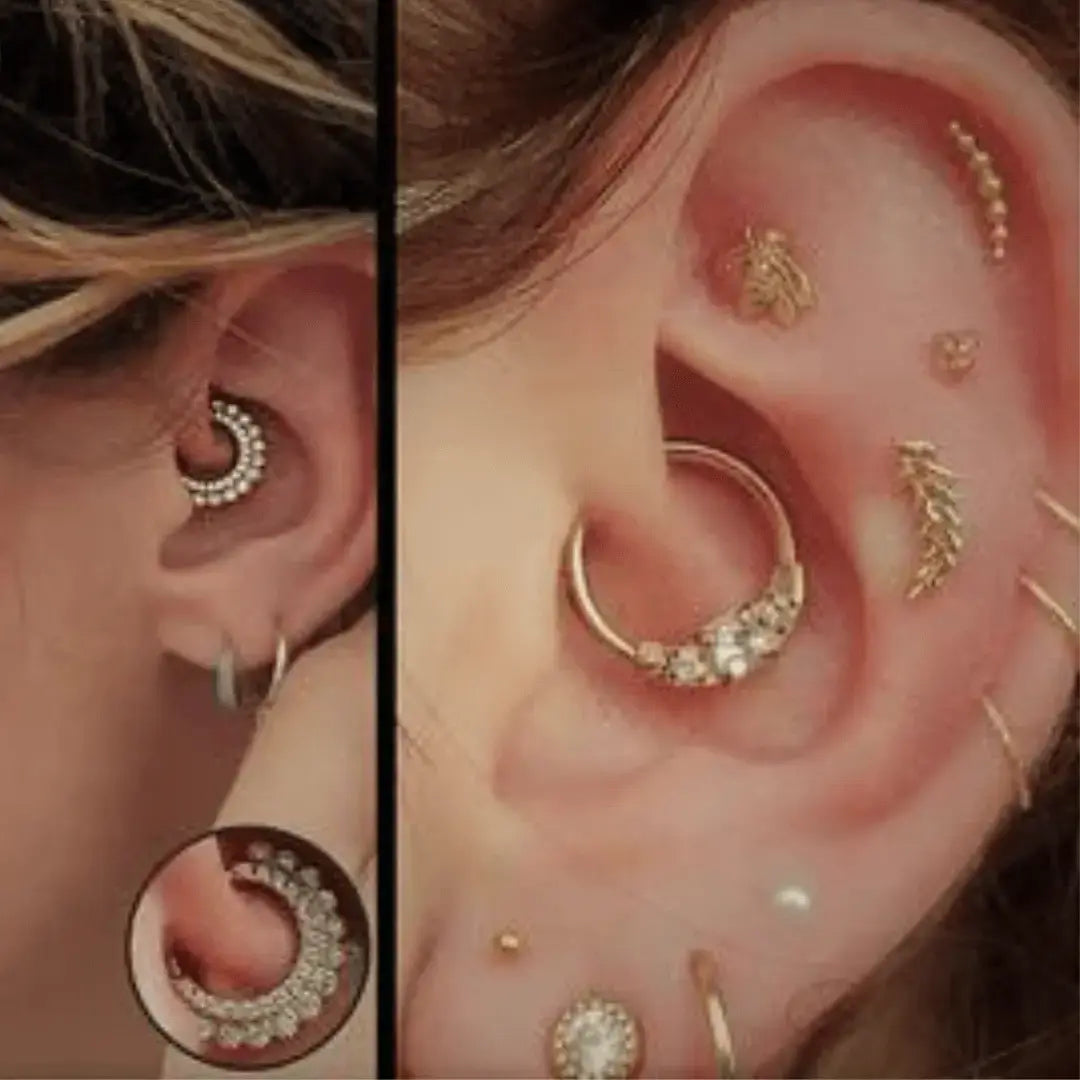
Good to know before putting a ring on your helix
Good to know before getting a hoop for your helix piercing
We are almost always asked to use a hoop as initial jewelry for helix, nostril, and generally cartilage piercings. Our answer is always the same: no hoops as initial jewelry, and no hoops before 6 months of healing.
We're going to take a moment in these lines to explain why:
First of all, our decision was not made to personally upset you. Because yes, there is no law about this, and it's an ethical choice for the piercer to make. This explains why some "pros" offer hoops as initial jewelry and others don't; there's no clear consensus. We will therefore explain our choice and why we are inflexible on this matter.
However, we do agree to offer a hoop for lobe piercings (not cartilage) or septum piercings (also not in cartilage).
But why do we refuse?
Firstly, due to the swelling caused by the piercing, a stage we all go through to varying degrees. We insert a longer bar than what will be used once the piercing is stable. A bar allows the ear or nostril to swell comfortably without compression and thus without complications.

With a hoop, it's much less effective, especially since most of the time we're asked for the smallest possible hoops, which can be dangerous in case of swelling in the first few days. The ear will be too compressed, which can lead to pain, sensations of heat, excessive lymph, and so on, all due to jewelry that's too small compared to the swelling ear.
We could use a very large hoop to counteract this effect, but no one wants a huge hoop on their nose/ear!
The main reason for "why no hoop" is... an angle issue! It's okay if you skipped math class, it's not hard to grasp, I promise 
A hoop exerts constant pressure on the ends of the canal, unlike a bar. If you're having trouble visualizing, the little diagram below will help ^^

This pressure can cause significant healing problems, even leading to keloids due to excessive scarring.
If you got pierced with a hoop in your helix, for example, there's a very good chance you struggled for at least the first few months: that's normal! Piercing healing, even with well-suited jewelry, can be complicated and unpredictable, so it's best to put all the chances on your side by avoiding putting a hoop in directly
There are obviously people who do it and don't have healing issues, and we constantly come back to the same point: we are speaking from a professional perspective, please do not use personal experience as a general truth.
Be aware that a piercing can take over a year to heal, even if it appears fine after a few weeks. Changing jewelry too soon can lead to complications and improper healing, which is why we ask all our piercing clients to return to the shop after a month for a check-up, and to come in at the slightest problem!
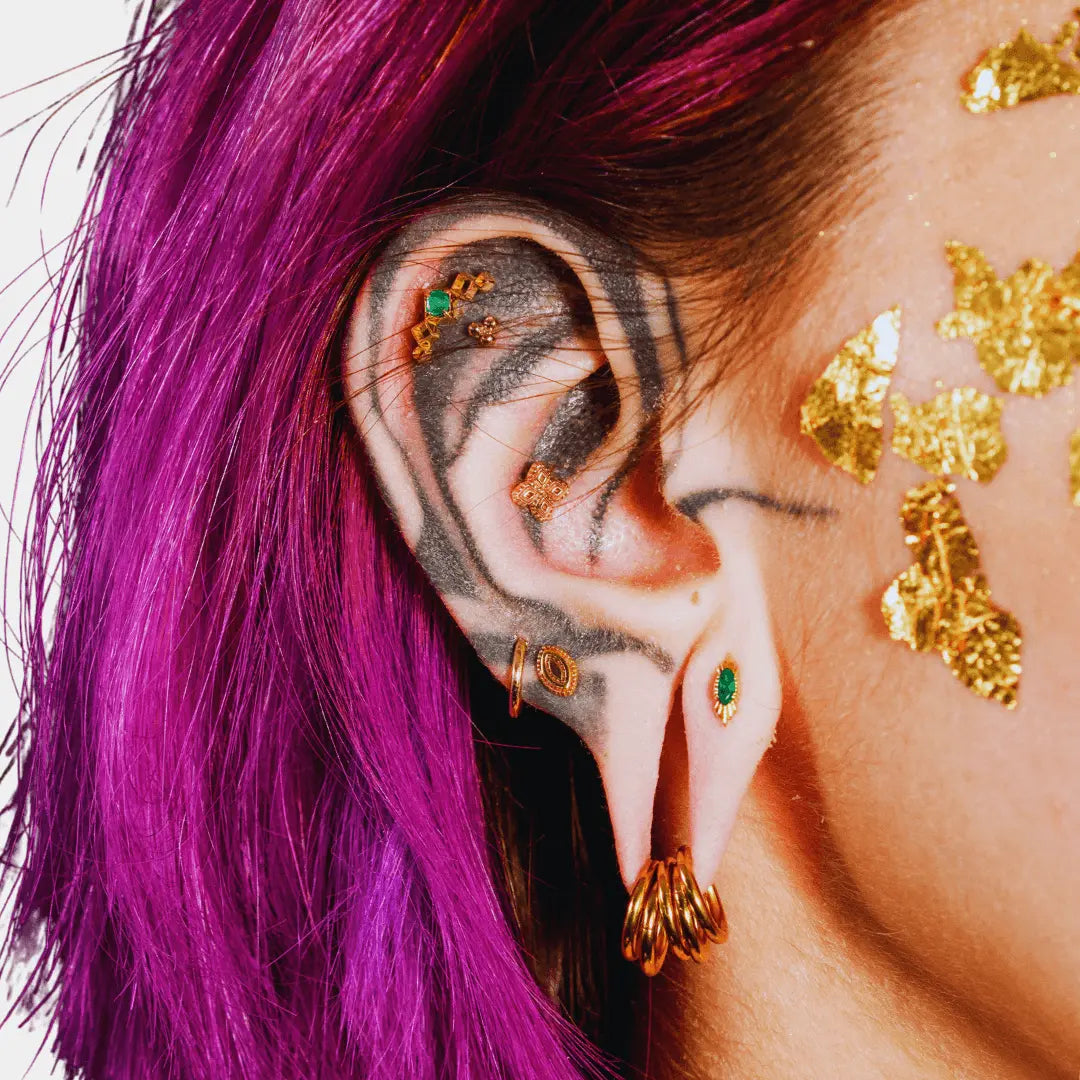
Also, be careful not to sleep on your fresh piercing, as this risks deviating the canal, as shown in one of the photos accompanying these few words.